image 17

Accelerated Resolution Therapy®

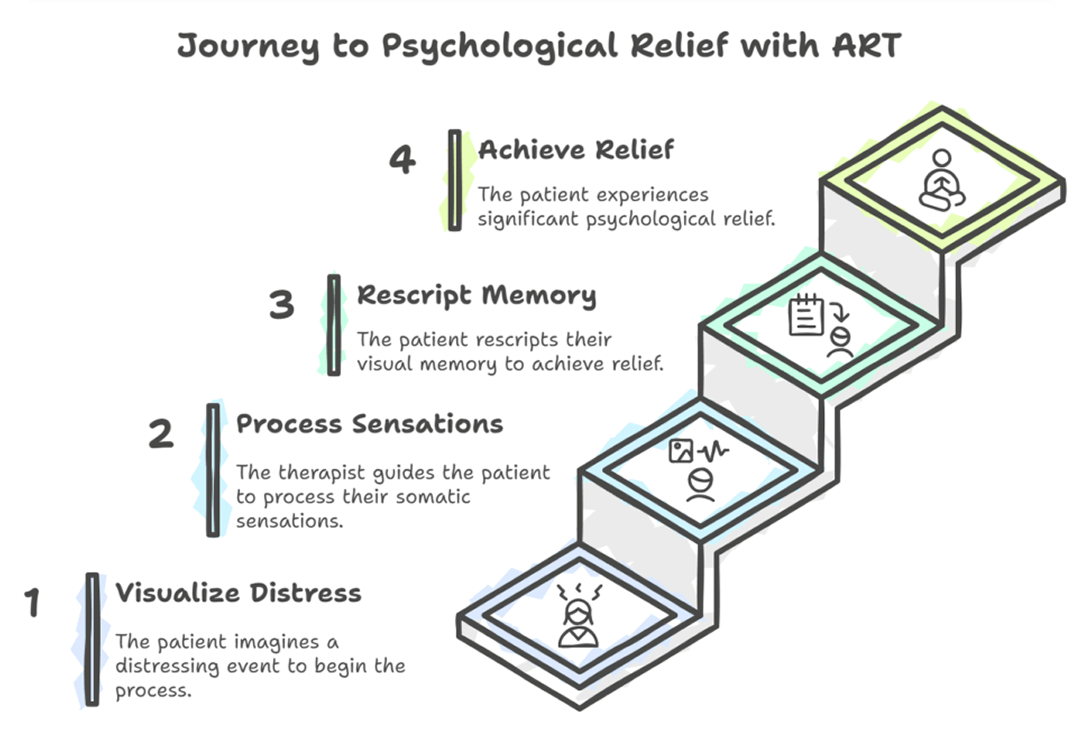
Accelerated Resolution Therapy® (ART) is a brief, structured form of psychotherapy designed to help you recover from distressing experiences, emotions, or sensations that may feel “stuck” in your mind or body. Using gentle, guided eye movements and visualization techniques, ART helps the brain reprocess troubling memories in a way that reduces emotional pain while preserving the facts of what happened. Through ART, clients are able to erase negative images associated with memories, resulting in the elimination of corresponding triggers.

During an ART session, you’ll remain fully in control as your therapist guides you through a series of eye movements—which we believe to be similar to what naturally occurs during dreaming—while you recall a difficult memory or feeling. Through this process, your brain can safely “update” the memory by removing or replacing the corresponding images so that it no longer triggers the same distress, fear, or physical tension. You don’t have to describe your trauma in detail if you prefer not to; many people appreciate this sense of privacy and control.

Most clients describe ART as calm, focused, and surprisingly efficient. Because each session follows a structured protocol, progress can often be seen within one or a few sessions rather than months of therapy. People commonly report significant improvements in symptoms of trauma, anxiety, depression, grief, and other stress-related problems, along with better sleep and a greater sense of peace.

image 17 1
image 17 2

Accelerated Resolution Therapy® (ART): How It Works and What to Expect

Accelerated Resolution Therapy (ART) is a brief, structured form of psychotherapy that helps people process distressing memories, sensations, and emotions associated with trauma and other stressful experiences. Developed in 2008 by Laney Rosenzweig, MS, LMFT, ART is an eye movement therapy, which draws on evidence-based components of existing therapies—such as a unique form of Gestalt, imaginal exposure, and imagery rescripting—and adds original interventions for various client issues and diagnoses. It then delivers these components together in a highly structured and time-efficient format.

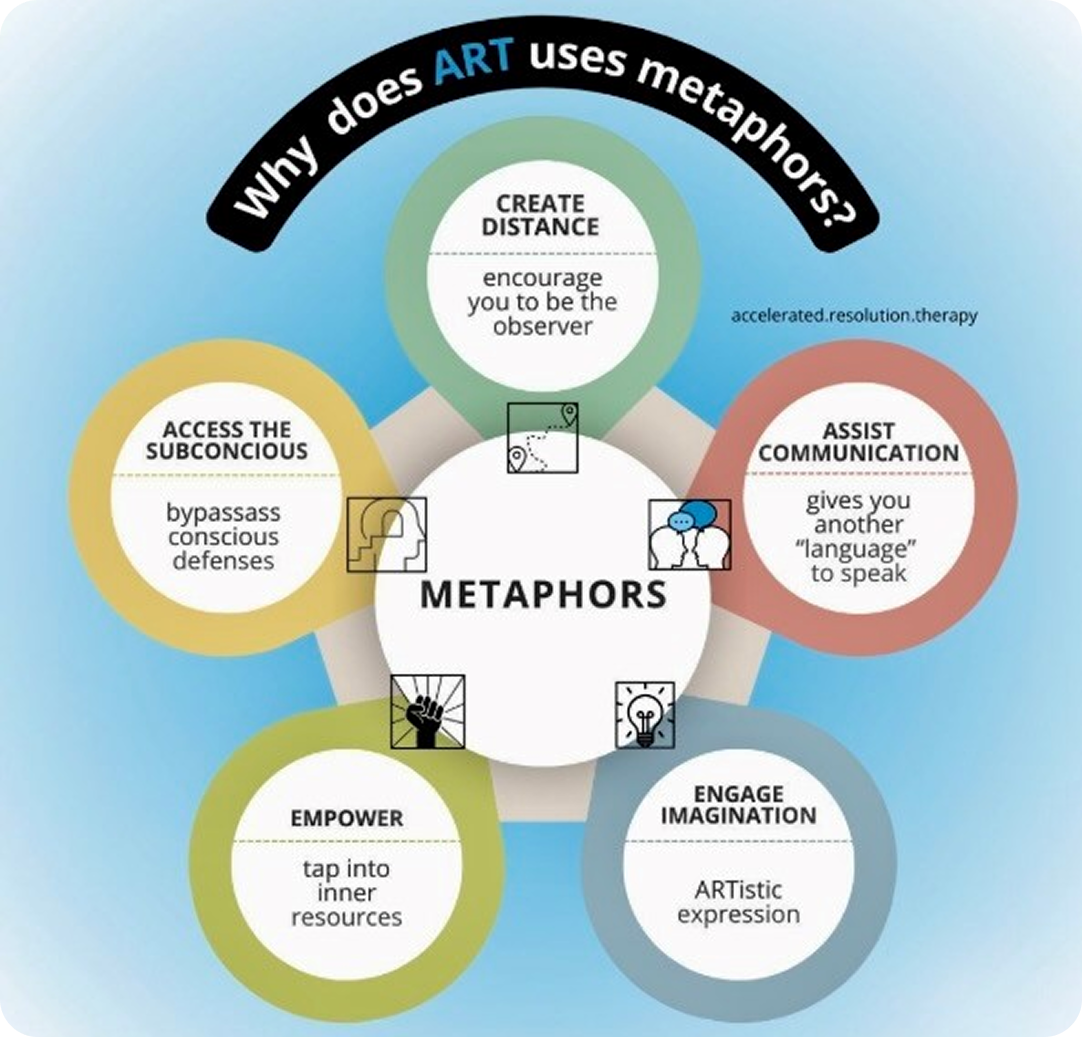
ART is a “bottom-up” therapy. What does that mean? ART helps regulate and adjust bodily responses by focusing on body sensations, emotional awareness, and movement impulses. This process releases energy trapped in a traumatic “freeze” response or persistent hypervigilance in fight or flight mode. This is important to adjust a client’s immediate reaction to perceived threats.  A person may intellectually understand why certain situations trigger them, but their body still sees the situation as an immediate threat.  By calming the body while visualizing the traumatic event and replacing negative images with positive ones, ART can significantly reduce or even eliminate emotional reactivity.

At the core of ART is the principle that painful or intrusive memories are stored in a way that continues to trigger emotional and physical distress long after the event. By re-engaging the brain’s natural memory reconsolidation process under safe, guided conditions, ART helps reprocess these memories in a way that allows them to be recalled without the original physiological and emotional charge. Clients retain the factual details of the traumatic memory, but lose the intense distress previously linked to it.

How ART Differs from Other Therapies

Other trauma therapies rely on exposure to create desensitization.  This means a client will have to relive the memory of their trauma in a controlled environment as they rehash painful details. With ART, clients don’t have to recount their trauma in detail to their therapist, making it a safer, more comfortable process. Plus, there’s no homework. ART uses targeted techniques that help you process and resolve trauma effectively, focusing on how memories are stored and experienced without reliving the pain.

ART shares some mechanisms with EMDR, particularly the use of bilateral eye movements and the aim of reducing distress associated with traumatic memories. However, ART differs in its structure and focus: sessions are more directive and include scripted interventions that actively guide the client to replace distressing images. ART is also briefer in format and many issues are commonly resolved in only one session—many clients complete treatment in fewer sessions than traditional trauma-focused therapies such as EMDR, Cognitive Processing Therapy (CPT) or Prolonged Exposure (PE).

Importantly, ART is not hypnosis. Clients remain fully alert, oriented, and aware throughout the process. Nor is ART a “band-aid” fix; while it can produce rapid relief, the method works through recognized neurological processes of memory reconsolidation supported by emerging research in affective neuroscience.

Evidence and Effectiveness

Peer-reviewed studies, including several randomized and controlled trials, have demonstrated that ART can significantly reduce symptoms of posttraumatic stress (PTS) and related conditions. A landmark trial in Military Medicine (2013) found that ART produced large and clinically meaningful improvements in combat-related PTS symptoms, including among veterans who had previously undergone other evidence-based therapies without full resolution. Replication studies have since reported similar outcomes in both military and civilian populations.

Beyond PTS, ART has shown promise in addressing depression, anxiety, grief, phobias, and pain-related distress. Case reports also suggest potential benefits for sleep disturbance and somatic symptoms. Research continues to expand, including neurobiological investigations of ART’s mechanisms and its application in primary care.

Why People Choose ART

Many individuals seek ART because it offers an efficient, empowering way to resolve distress without months of therapy or repeated retelling of painful memories. For some, ART provides a bridge after other therapies have plateaued; for others, it serves as an accessible first-line intervention. Because sessions are typically few in number, ART can be a cost-effective option for individuals and healthcare systems alike.

ART represents an innovative approach that blends structured protocol with deep emotional processing. For clients and clinicians alike, its central promise is simple: to help people remember the facts around difficult memories by removing or replacing the associated negative images, and to restore calm, clarity, and resilience in the process.


Official ART® Branding Logos

Looking For a Safe Space Where Your Child Can Feel Understood?

If you are looking for trusted child therapy in Edmonton or child psychology Edmonton services, our team at Collective Healing Centre is here to help. Contact us today to schedule a session and give your child the support they deserve in a safe, compassionate, and professional environment.

Request an AppointmentBook an Appointment

Common FAQs from a Patient Perspective

What is Accelerated Resolution Therapy (ART)?

Accelerated Resolution Therapy® (ART) is a brief, structured form of psychotherapy that helps reduce distress tied to difficult experiences or memories. Using guided eye movements and visualization techniques, ART helps your brain reprocess troubling images, sensations, and emotions so they no longer cause the same level of distress.

How does ART work?

ART works through a process called memory reconsolidation, which helps your brain change the way painful memories are stored. During guided eye movements, you’ll intentionally replace distressing images with new, calm, or positive images. The factual memory remains, but the emotional and physical reactions are eliminated.

Do I have to talk about my trauma in detail?

No. One of ART’s most unique features is that you do not need to describe your trauma or personal experiences in detail if you prefer not to. You can still fully process and resolve those memories privately, while your clinician guides you through the technique.

How is ART different from other therapies?

ART is both brief and highly focused. Many evidence-based trauma therapies—like EMDR, Prolonged Exposure, or Cognitive Processing Therapy—can require several months of sessions. ART uses a structured protocol that allows meaningful change to occur in much fewer sessions, often within one to five visits. It also emphasizes client control and avoids prolonged reliving of trauma.

What kinds of issues can ART help with?

ART has been shown to help with many issues, including PTS and trauma-related symptoms, anxiety and panic, depression, grief and loss, phobias, sleep problems, and chronic stress or pain with emotional components.

How many sessions will I need?

Each person’s needs are different, but many clients report noticeable improvement within one to five sessions. Trauma from multiple events that are linked to one issue in the client’s brain can be often be done together in a single session. Your clinician will collaborate with you to determine the best pace and treatment plan.

What is a typical ART session like?

Sessions are usually 60 minutes. You’ll be seated comfortably while your therapist guides you through sets of side-to-side eye movements and visualization exercises. You’ll focus on specific images, sensations, or emotions, while the clinician helps you transform how those memories are stored and experienced.

Will I have to relive painful memories?

Unlike some traditional trauma therapies, ART is designed to minimize re-traumatization. You will recall distressing images briefly (which is what researchers call “imaginal exposure”), but the goal is to replace them with calm, safe, or empowering images—often leading to immediate emotional relief.

Is ART hypnosis?

No. ART is not hypnosis. You remain awake, alert, and in full control throughout the session. Clients typically describe feeling calm and focused rather than detached or unaware.

Is ART evidence-based?

Yes. ART has been studied in peer-reviewed research, including randomized and controlled trials with veterans and civilians. Studies have shown significant improvements in PTSD, depression, anxiety, and related symptoms, often within a few of sessions.

Does ART work if I’ve already tried other therapies?

Yes. Research and clinical experience show that ART can be helpful for people who haven’t found full relief from other evidence-based therapies like Cognitive Processing Therapy or Prolonged Exposure. It offers a new pathway to resolve distress without prolonged exposure or repeated retelling of trauma.

Is ART safe?

Yes. ART is considered a safe, low-risk intervention. It is delivered by licensed mental health professionals who have completed specialized ART training and certification. As with any psychotherapy, your clinician will ensure the pace and focus are appropriate for your comfort and safety.

What does ART feel like?

Many people describe ART sessions as calm, focused, and surprisingly gentle. You may experience physical sensations—like tingling, tightness, tears, or relaxation—as emotions shift and release. Clients often leave sessions feeling lighter, calmer, and more in control.

How long do results last?

While everyone is different, research and clinical reports suggest that ART’s effects are long-lasting. Once the brain has reprocessed a distressing memory, the emotional and physical reactivity tied to those memories are typically eliminated.

Can ART be done virtually?

The developer of ART does not endorse virtual ART sessions, however, some clinicians provide ART through secure telehealth platforms, using adapted visual tracking methods. Not all clients or situations are suited for virtual delivery, so discuss this option with your clinician.

How do I know if ART is right for me?

If you’ve experienced distressing memories, trauma, or ongoing anxiety that you’d like to resolve quickly and safely, ART may be a good fit. You can schedule a consultation with an ART-trained clinician to discuss your history, goals, and whether this approach aligns with your needs.