
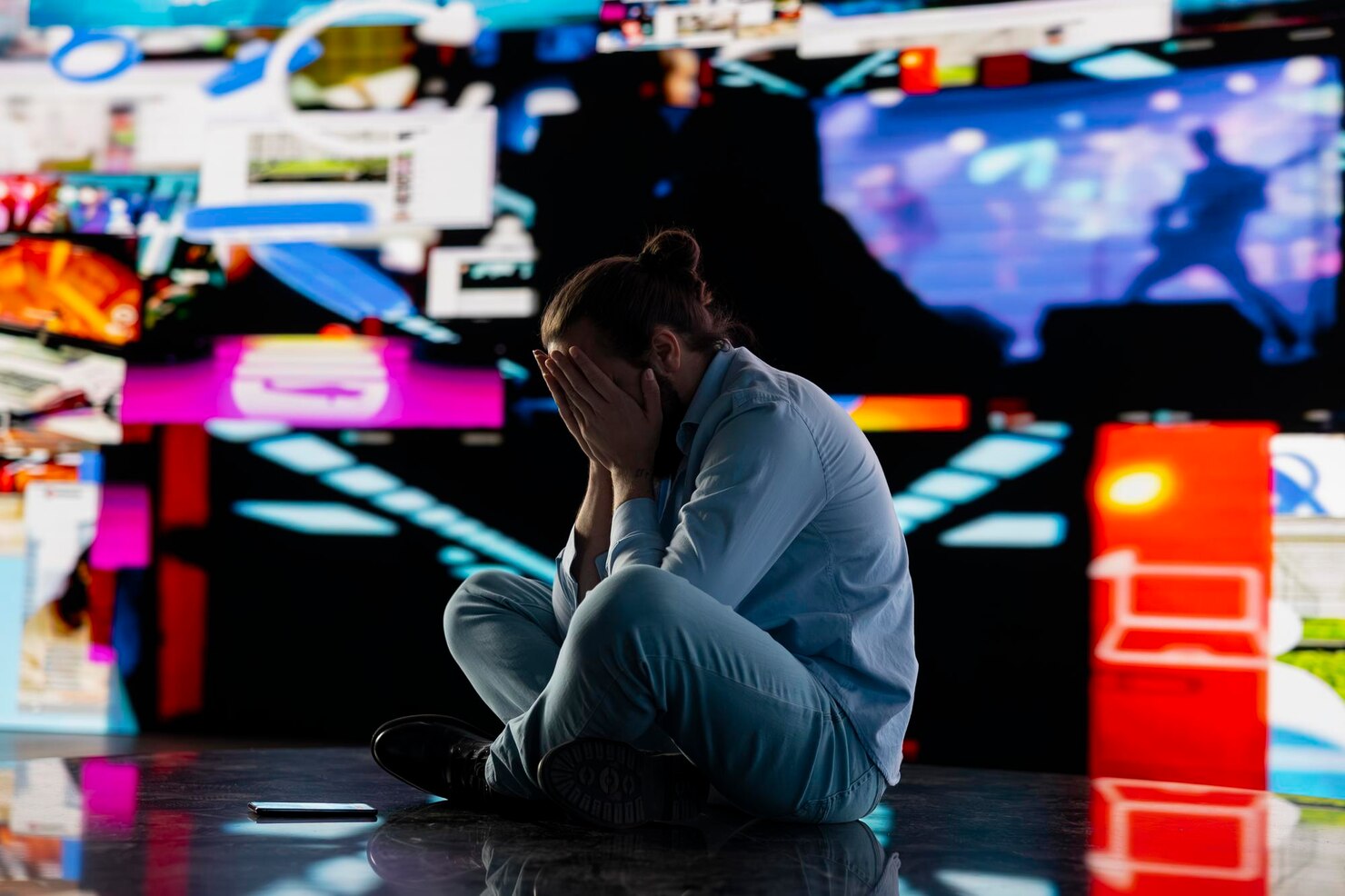
And what can you do to protect your well-being?
Violence, tragedy, and crisis-driven headlines are no longer occasional interruptions in our lives. They have become a near-constant presence. From 24-hour news cycles to social media feeds that update endlessly, people are being exposed to distressing content at unprecedented levels. As coverage of violence and crisis increases, so do reports of anxiety, fear, emotional exhaustion, and a growing sense of helplessness.
Many people describe feeling on edge, unsafe in their communities, overwhelmed by uncertainty, or emotionally numb after prolonged exposure to negative news. Research increasingly supports what many already feel intuitively: too much exposure to distressing media can have real and lasting effects on mental health, even when we are not directly involved in the events being reported.
How Negative Media Exposure Affects Mental Health
You don’t have to experience violence to be affected by it personally. Research shows that simply witnessing or repeatedly hearing about violent events through news or social media can trigger trauma responses, including symptoms associated with post-traumatic stress disorder (PTSD) (HelpGuide, 2025).
People exposed to repeated media coverage of violence may experience
- Intrusive thoughts or images
- Heightened anxiety or fear
- Difficulty concentrating
- Sleep disturbances
- Emotional numbing or irritability
For children and adolescents, the effects can be especially profound. Even without direct exposure, hearing about violence through media can have a negative impact on a child’s sense of safety, altering how they perceive the world and their place in it.
Emotional Distress, Fear, and Hypervigilance
Studies consistently show that increased news consumption is associated with greater emotional distress, particularly when exposure occurs through television and social media (American Psychological Association [APA], 2022). One reason for this uncertainty is that our brains are conditioned to seek safety and predictability, and constant exposure to threat-based content keeps the nervous system in a heightened state of alert.
Social media intensifies this effect. Platforms are designed for infinite scrolling, and during times of crisis, negative content can dominate feeds, creating the impression that danger is everywhere and unavoidable. This phenomenon, often referred to as “doomscrolling”, leads to spikes in anxiety, sadness, and emotional fatigue (Huff, 2022).
Desensitization and Normalization of Violence
Long-term exposure to violent media doesn’t just increase distress, it can change emotional responses over time. Research on children and adolescents shows that repeated exposure to violent imagery can lead to desensitization, where natural emotional reactions such as discomfort, fear, or empathy gradually diminish (Anderson et al., 2003)
While emotional numbing may feel protective, it carries risks. Desensitization has been linked to:
- Reduced emotional responsiveness
- Increased tolerance of aggression
- Greater likelihood of viewing violence as “normal”
This normalization is especially concerning among youth. Research indicates that a significant number of teenagers who see weapons and violence on social media report feeling less safe, less willing to go out, and more likely to view weapon carrying as a regular part of life (Youth Endowment Fund, 2023).
Coping Strategies: Protecting Your Mental Health in a Media-Saturated World
While staying informed matters, being constantly immersed in distressing content does not improve safety, and it often harms mental health. The goal is not avoidance, but intentional consumption.
- Set Clear Media Boundaries
- Turn off push notifications for news and social media
- Limit news or social media checks to specific times (e.g., 15 minutes, once or twice daily)
- Create tech-free zones (such as during meals or before bed)
For parents, modelling these boundaries is powerful. Children learn emotional regulation by watching how adults engage with media.
- Slow down Anxious Thought Loops
When a headline sparks anxiety, try writing it down by hand. This simple practice slows cognitive processing and helps reduce emotional intensity. Once written, ask yourself:
- How likely is this to directly affect me?
- What evidence supports or contradicts this fear?
Slowing thoughts down often makes them more realistic and manageable (APA, 2022)
- Balance information with Regulation
After consuming difficult news, intentionally engage in something that calms your nervous system:
- Gentle movement or a walk
- Deep breathing
- Connecting with a trusted person
- Engaging in something grounding or creative
Regulation helps prevent emotional overload from accumulating
- Talk with Children – Calmly and Honestly
When children are exposed to distressing news:
- First, regulate your own emotions before starting the conversation
- Use age-appropriate language
- Invite them to share how they feel and what they understand
- Reassure them about safety and emphasize the presence of helpers and protective systems
Maintaining routines and offering physical comfort can also restore a sense of stability (HelpGuide, 2025)
- Seek Support When Needed
If distress, fear, or trauma symptoms begin interfering with daily functioning, professional support can help. Therapy provides a space to process emotional responses, restore a sense of safety, and develop coping tools tailored to your needs.
Staying informed should not come at the cost of your mental health. In a world where negative news is constant and highly accessible, protecting your emotional well-being is not avoidance, it is resilience. Choosing how, when, and how much media you consume is an act of self-care.
References
American Psychological Association. (2022, November). How media overload strains mental health. https://www.apa.org/monitor/2022/11/strain-media-overload
Anderson, C. A., Berkowitz, L., Donnerstein, E., Huesmann, L. R., Johnson, J. D., Linz, D., Malamuth, N. M., & Wartella, E. (2003). The influence of media violence on youth. Psychological Science in the Public Interest, 4(3), 81–110. https://pmc.ncbi.nlm.nih.gov/articles/PMC2704015/
Byars, A., et al. (2025). Psychosocial effects of social media–mediated exposure to gun violence. Journal of Aggression, Maltreatment & Trauma. https://doi.org/10.1080/10926771.2025.2548449
HelpGuide. (2025). The effects of gun violence on mental health. https://www.helpguide.org/mental-health/ptsd-trauma/effects-of-gun-violence-on-mental-health
Youth Endowment Fund. (2023). 70% of teens see real-life violence on social media, new research reveals. https://youthendowmentfund.org.uk/news/70-of-teens-see-real-life-violence-on-social-media-reveals-new-research/

