
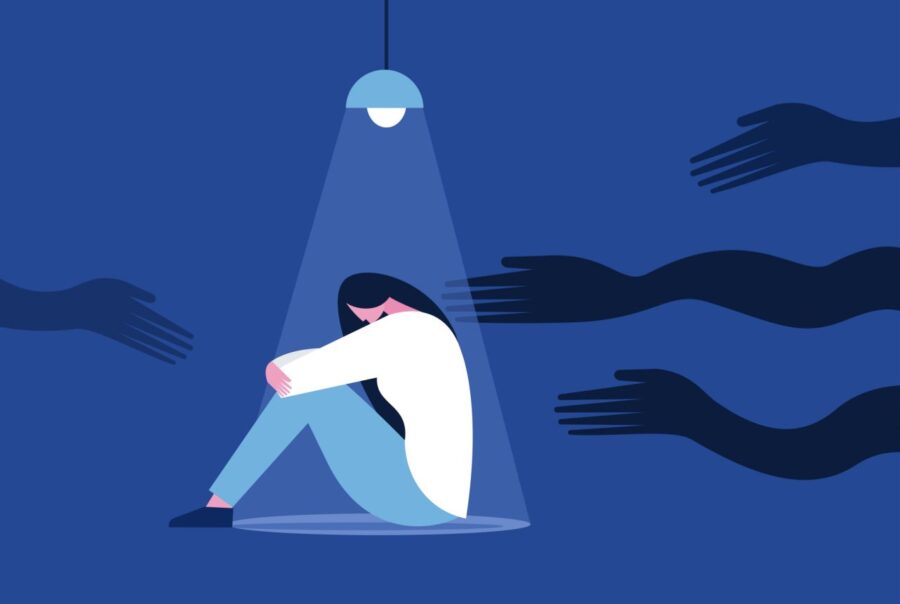
Many people walk through life carrying anxiety, exhaustion, emotional numbness, or sense that something feels off, even when things look “fine” on the outside. They may have stable jobs, loving relationships, or a life that appears to be successful, yet internally they feel disconnected, overwhelmed, or constantly on edge.
When this happens, it’s easy to turn the blame inward.
- Why can’t I cope like everyone else?
- Why do I feel this way when nothing “bad enough” happened?
But trauma doesn’t begin with weakness. It begins with adaptation.
As explored in the Myth of Normal, emotional and mental distress does not come out of nowhere. It develops within the context of a person’s life, their relationships, stressors, losses, expectations, and the environments they had to survive in. Our symptoms are not random malfunctions; they are responses shaped over time by what we’ve lived through (Maté, 2022).
Modern culture often treats emotional pain as something located solely inside the individual, a problem of faulty brain chemistry or personal resilience. While biology does play a role, this narrow focus can unintentionally strip away the larger story. When we look only at the “symptom,” we miss the “why”. We miss the impact of chronic stress, emotional neglect, pressure to perform, or the quiet need to stay small in order to belong (Maté, 2022).
From this perspective, distress is not evidence that someone is broken. It is evidence that their nervous system learned how to function in conditions that were, at some point, overwhelming.
Trauma Doesn’t Just Live in the Mind – It Lives in the Body
Even when painful experiences are long past, the body often remembers.
In moments of perceived threat, whether physical or emotional, the brain activates its built-in alarm system. This system exists to keep up alive. It reacts quickly automatically, and without consulting our rational mind. Our heart rate increases, muscles tense, beathing changes, and attention narrows toward survival (Van Der Kolk, 2014).
According to The Body Keeps the Score, this response is driven by older parts of the brain that evolved long before language or logic. These parts are excellent at detecting danger, but they are not great at telling time. When trauma is involved, the nervous system may continue reacting as though the threat is still happening, even when it isn’t (Van Der Kolk, 2014).
This is why someone might:
- Feel panicked in situations they know are safe
- Freeze during conflict
- Shut down emotionally without meaning to
- React strongly before they have time to think
These responses aren’t choices. They are reflexes shaped by past experiences.
Over time, living in a constant state of stress can take a toll on the body, affecting immunity, mood, focus, sleep, digestion, and overall health (Maté, 2022). The body is not betraying the person; it is responding exactly as it learned to.
Trauma Also Affects Our Sense of Connection
Trauma doesn’t just change how we feel inside our bodies, it can also change how we relate to others.
As described in Trauma and Recovery, overwhelming experiences often fracture our sense of trust, belonging, and meaning. Trauma can quietly reshape how safe the world feels where it seems ok to rely on others (Herman, 2015)
Many people who have experienced trauma describe feeling deeply alone or cut off, even when surrounded by others. This disconnection isn’t a personal flaw, it’s a natural response to experiences that overwhelmed a person’s capacity to feel safe and supported at the time (Herman, 2015).
Healing Begins Gently – Not by Forcing Change
Healing from trauma doesn’t mean erasing the past or “getting over it”. It begins with helping the nervous system learn that safety is possible again.
Research shows that simple practices like slow, steady breathing, gentle movement, and grounding attention in the body can help calm the stress response. Because much of the communication between the body and brain travels from the body upward, small physical shifts can have powerful emotional effects (van der Kolk, 2014)
Another key part of healing is learning to notice sensations and emotions without immediately trying to push them away. Avoiding bodily sensations can actually make them feel more overwhelming over time. Gently building awareness helps create choice, rather than reacting automatically (Van Der Kolk, 2014).
Just as important is connection. Supportive, non-judgemental relationships are one of the strongest protective factors against long-term trauma effects. Feeling safe with others, emotionally and physically, helps the nervous system loosen its grip on survival mode (Van Der Kolk, 2014; Herman, 2015).
For many people, this process is not something they can, or should, do alone.
Therapy can offer a steady, supportive space where healing doesn’t have to be rushed or forced. Rather than focusing on what’s “wrong”, trauma-informed therapy centres on safety, curiosity, and understanding. It provides a relationship where experiences can be explored gently, at a pace that feels manageable, and without judgement.
Having another person help you notice pattens, make sense of your responses, and reconnect with your body and emotions can be deeply regulating. Overtime, this kind of support helps the nervous system learn that it no longer has to stay in survival mode. Healing happens nor through pressure or analysis, but through repeated experiences of being heard, believed, and met with compassion.
Seeking therapy is not a sign that you’ve failed to cope. It’s a sign that you’re listening to yourself, and allowing support where it is needed.
References
Herman, J. L. (2022). Trauma and recovery: The aftermath of violence – from domestic abuse to political terror. Basic Books.
Maté, G., & Maté, D. (2024). The myth of normal: Trauma, illness & healing in a toxic culture. Vermilion.
Van der Kolk, B. A. (2015). The body keeps the score: Brain, mind, and body in the healing of trauma: Key takeaways, Analysis & Review. Instaread.

 Call Now